








Qyrus Named a Leader in The Forrester WaveTM: Autonomous Testing Platforms, Q4 2025 – Read More

AIOps · Self-Healing Operations · BizOps · FinOps · L1/L2 Automation

Run Without Firefighting. Improve With Every Incident.

Most IT operations teams are caught in a loop: alert fires, war room convenes, repeat. The same incidents recur because the knowledge from resolving them never makes it back into the system. QyrusAI Application Run AI breaks that loop – by correlating signals across your entire estate, resolving the routine without a human, and turning every production incident into permanent operational knowledge that prevents the next one.

Challenge

The Operations Problem
Every IT Team Knows.

Lorem Ipsum Lorem IpsumLorem IpsumLorem IpsumLorem IpsumLorem IpsumLorem IpsumLorem IpsumLorem IpsumLorem Ipsum

Alert Noise Without Context

Thousands of alerts, dozens of tools, no single view of what actually matters. SRE teams spend more time triaging than fixing — and still miss the signals that matter.

Operational Knowledge Lives in People

Runbooks live in one engineer's head. When they go on leave — or leave the company — the knowledge goes with them. Attrition is an operational risk most teams have no plan for.

Repeat Incidents Recur Forever

Every post-mortem produces action items. Few of them reach the systems that generated the incident. Next month, the same war room convenes for the same issue.

Costs Are Attributed to Departments, Not Services

Cloud spend, application run costs, and license fees appear on an IT bill — but cannot be attributed to the specific business services or applications that generated them. Finance and IT are always negotiating from different data.

How it works

Operate — Bridge Sentence

Here is how Qyrus Application Run AI addresses each of these — by sitting above your existing monitoring stack, correlating signals across the whole estate, and building permanent operational knowledge with every incident.

Reduce thousands of alerts to a handful of actionable incidents.

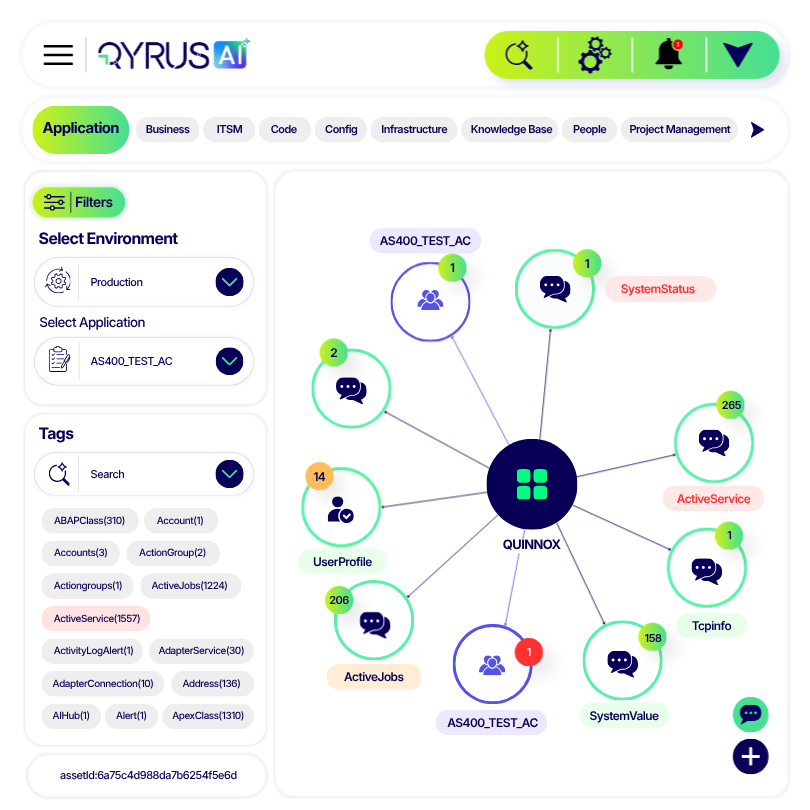
Qyrus AIOps ingests signals from your existing monitoring tools — Dynatrace, Datadog, New Relic, Splunk, ServiceNow — and correlates them across the full estate. Noise is eliminated. Incidents are grouped by root cause, not by alert volume. Every incident is annotated with the affected business service, the dependency path that caused it, and the operational cost of the disruption.

  •   Sits on top of your existing monitoring stack — no rip-and-replace required
  •   Correlates signals across infrastructure, application, and business service layers simultaneously
  •   Repeat incident detection: incidents flagged as a recurring pattern surface automatically — the war room question “have we seen this before?” is answered before it is asked

Resolve the routine without a human. Govern what reaches production.

L1/L2 automation handles the highest-volume, lowest-complexity ticket categories — restart sequences, threshold responses, known incident patterns — within policy bounds. Self-healing operations close failure patterns before they repeat. Human approval gates are enforced for Level 3 actions in regulated environments.

  •   L1/L2 automation on the ticket categories that consume the most on-call hours
  •   Self-healing operations: governed remediation that executes within the autonomy level you configure (Level 0–3)
  •   Every automated action is logged to Qhive with timestamp, policy reference, confidence score, and outcome

Every action is bounded, auditable, and reversible.

The Operate autonomy framework uses a Level 0–3 model: Level 0 recommends only; Level 1 prepares artifacts; Level 2 acts in controlled environments; Level 3 acts in production with explicit human sign-off. Regulated environments run at Level 2 or Level 3 by default. Every action — at every level — is logged to Qhive with the recommendation, confidence score, human decision, and outcome.

  •   Level 0–3 autonomy configuration per action class — never a binary “on/off” for AI in production
  •   Every action evidence-logged: what was recommended, what confidence, who approved, what happened
  •   DORA, FCA/PRA, and NIST AI RMF governance posture met by the platform architecture, not by a compliance overlay

Turn operational data into cost intelligence and modernization signals.

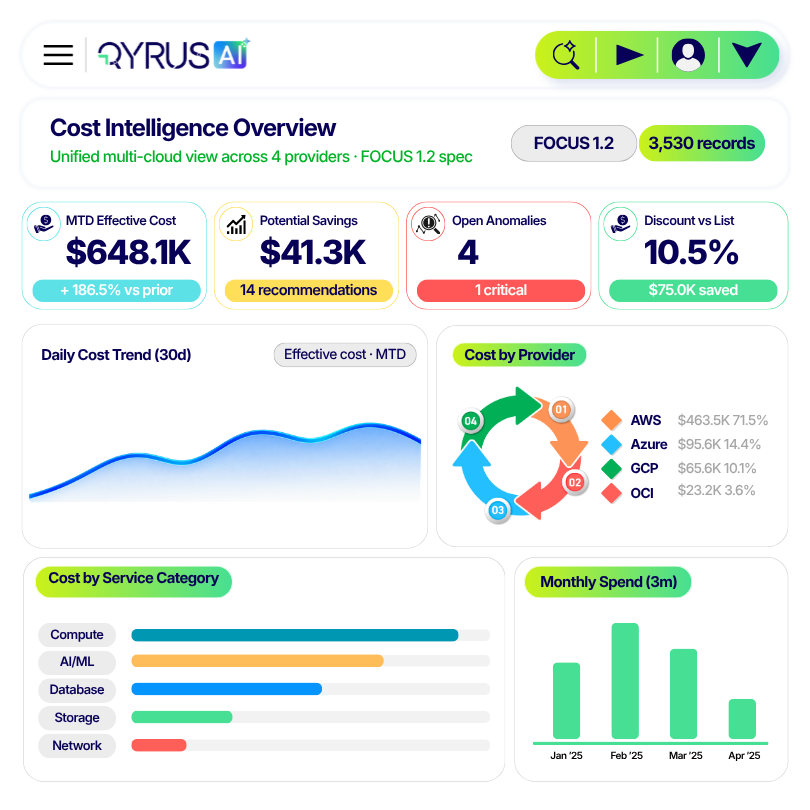
Every operational event, cost signal, and system health metric is stored in the Knowledge Graph and in Qhive. FinOps dashboards show cloud spend, license utilisation, and idle resource waste per application and per business service. BizOps dashboards link IT health to business service performance. Recurring incidents become the evidence base for a funded modernization programme.

  •   FinOps: full cloud cost visibility attributed to applications and business services — not just cost centres
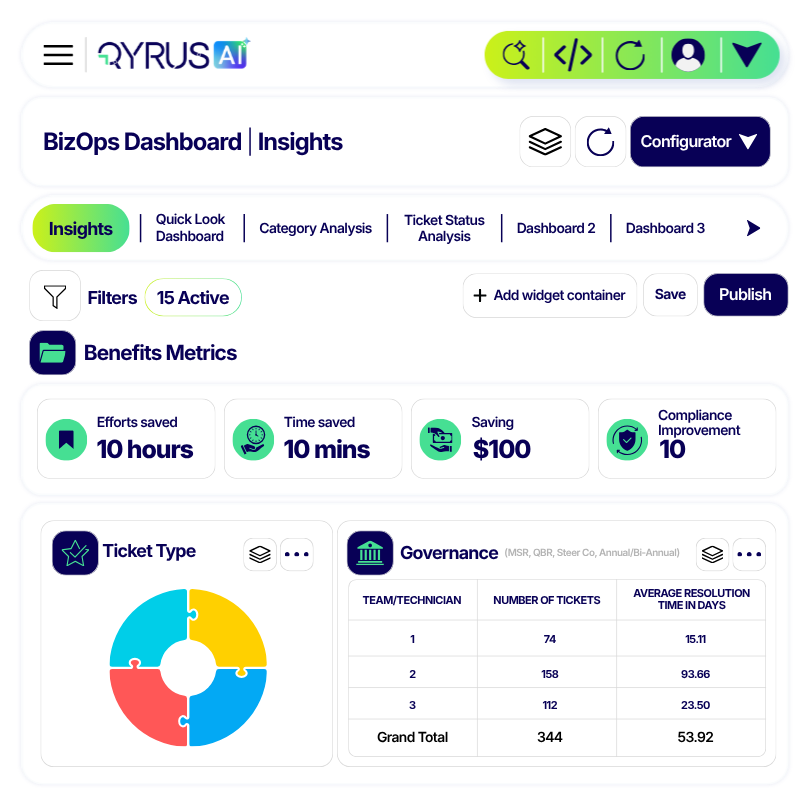
  •   BizOps: business service health in real time — the COO sees business impact, not IT metrics
  •   Operate → Modernize feedback: recurring incident patterns are scored as modernization priority signals in the Knowledge Graph

Core Features

Lorem Ipsum Dolor Sit Amet. Lorem Ipsum Dolor Sit Amet. Lorem Ipsum.
incididunt ut labore et dolore magna aliqua. Ut enim ad minim veniam, quis.

Built for Operations Teams
That Run Complex Enterprise Estates at Scale.

AIOps & Event Intelligence

Correlates signals across your full estate — application, infrastructure, and business service. Noise reduction from thousands of alerts to actionable incidents.

BizOps

Business service health in real time — maps IT events to the business services and transactions they affect. What the COO sees, not just what the dashboard shows.

FinOps & Cloud Cost Intelligence

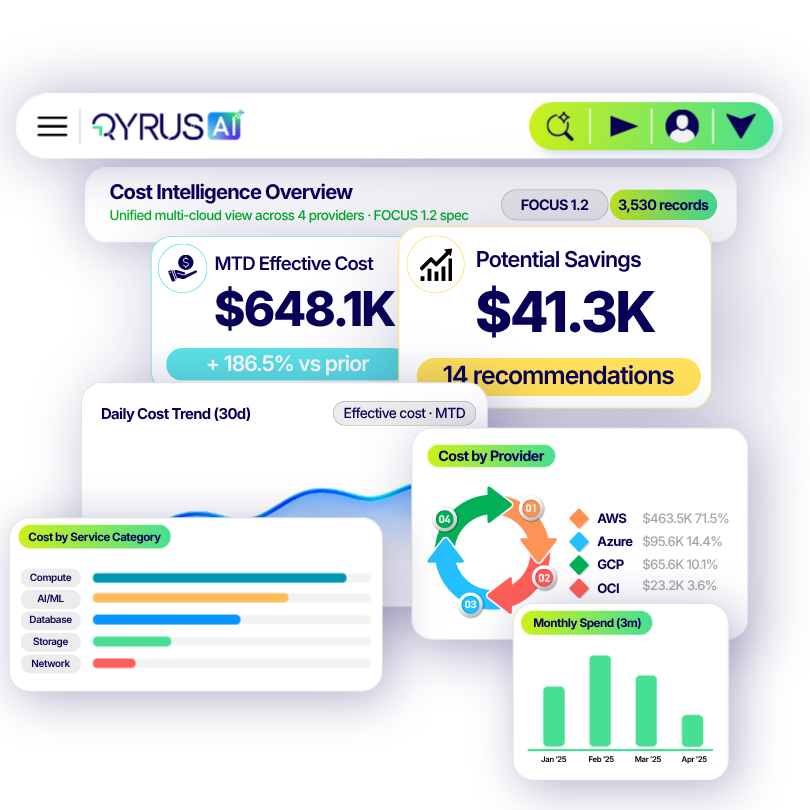
Full cloud and application spend visibility attributed to business services. Idle resource detection, license optimisation, and vendor overlap identification.

DevSecOps

Security embedded in the delivery pipeline — vulnerability detection, shift-left security testing, and continuous compliance monitoring without slowing release velocity.

Self-Healing Operations

Governed remediation for known failure patterns — resolves recurring incidents autonomously within configured policy bounds. Every action logged, reversible, and auditable.

L1/L2 Automation

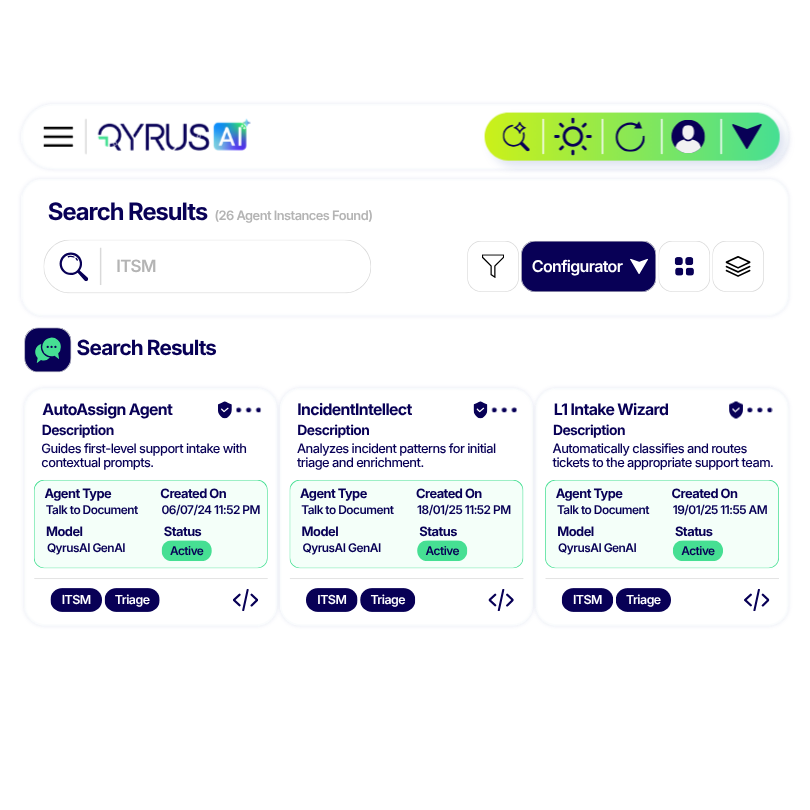
Agentic automation for the ticket categories that consume the most on-call hours — restart sequences, threshold responses, runbook execution — without human triage.

Intelligent Twin

A digital twin of your production estate — simulates the impact of any operational change before it runs. Change management risk reduced to a pre-approved blast-radius score

Shadow IT Discovery

Continuously discovers applications and SaaS tools procured outside IT governance — including AI tools. Closes the gap between the CMDB and reality.

Software Asset Management

Full software license inventory with utilisation analytics per application and per team. Renewal preparation from evidence, not from what the vendor tells you.

A GLIMPSE ON THE NUMBERS

Outcomes & Benefits

Fewer Incidents. Faster Resolution. Autonomous Operations. Evidence-Backed.

%+ 0 %

Faster incident resolution

20 - %

Fewer reactive incidents

10- 0 %

Run cost reduction

0 %

ROI — UK bank, full platform

Continuous testing. Continuous learning. Continuous value.

Join leading enterprises
driving the loop forward.

Integration

Sits on Top of Your Existing Monitoring Stack
No Rip-and-Replace Required

QyrusAI reads from your existing observability tools and writes context back to them — so your current monitoring investment is enriched, not replaced. The intelligence layer runs above Dynatrace, Datadog, and ServiceNow; the stack you built does not change.

Logo
Logo
Logo
Logo
Logo
Logo
Logo
Logo
Logo
Logo
Logo
Logo
Logo
Logo
Logo
Logo
Logo
Logo
Logo
Logo
Logo
Logo
Logo
Logo
Logo
Logo
Logo
Logo
Logo
Logo
Logo
Logo
Logo
Logo
Logo
Logo
Logo
Logo
Logo
Logo
Logo
Logo
Logo
Logo
Logo
Logo
Logo
Logo
Logo
Logo
Logo
Logo
Logo
Logo
Logo
Logo
Logo
Logo
Logo
Logo
Logo
Logo
Logo
Logo
Logo
Logo
Logo
Logo
Logo
Logo
Logo
Logo

CUSTOMER TESTIMONIALS

Enterprises running the loop
in their own words.

Real Teams. Real Outcomes. Real Confidence in what ships next.
Lorem Ipsum Dolor Sit Amet. Lorem Ipsum Dolor Sit Amet. Lorem

Shawbrook Bank

Qyrus not only supports the testing of our Web, Mobile, and API components as part of our CI/CD processes, but also in ongoing regression-testing across our partner ecosystem. The real power of Qyrus is that we have this extremely broad testing capability in one tool, run in the cloud, and reusable across all our development teams.

Shawbrook Bank
Subaru

The transition to Qyrus has marked a significant turning point for us. By embracing automation, we not only streamlined our SAP test automation process but also achieved a remarkable reduction in overall project testing time by 40%.

Subaru
Monument

... the Qyrus platform have been a great addition to Monument's product delivery capabilities. Within a few months, we have been able to create a comprehensive test suite of complex end-to-end test scenarios spanning multiple platforms and channels. The Quinnox team has helped us embed the Qyrus solution, and the supporting processes around it, into our agile delivery methodology.

Monument

Resources

Explore our curated library of expert blog posts, in-depth whitepapers, and real-world case studies, designed to help you stay ahead in the world of AI-driven application lifecycle management.

August 19, 2026 | 18 min

User Acceptance Testing Best Practices: A Complete UAT Strategy Guide for SAP Teams

Read More
SAP UAT Test Cases Templates, Examples & Design Best Practices-Thumnail

August 6, 2026 | 14 min

SAP UAT Test Cases: Templates, Examples & Design Best Practices

Read More

July 27, 2026 | 10 min

SAP IBP Testing: A Practical Guide for QA and Planning Teams

Read More
coca-cola bottler case study
Case Study

September 17, 2025 | 5 min

From Bottlenecks to Breakthroughs: A Coca-Cola Bottler’s Quality Transformation 

Read More
CCEP Case Study
Food and Beverages

June 27, 2025 | 5 min

AI-Powered Testing Transforms One of the Largest Beverage Companies

Read More

Banking Digital Transformation
BFSI

June 20, 2025 | 8 min

150% Efficiency Boost for Banking Client Using Device Farm 

Read More
BFSI Mumbai, 2026

July 13, 2026 | 1 min

Meet Qyrus at the BFSI Innovation & Technology Summit India 2026

Read More
QonfX-BLR-2026

April 6, 2026 | 3 min

Qyrus at QonfX Bangalore: AI Testing, Context Engineering & QA Innovation

Read More
Stareast 2026

March 23, 2026 | 3 min

STAREAST 2026: Joining the Quality Engineering Conversation in Orlando

Read More

August 13, 2026 | 2 min

Qyrus Named in Gartner’s Market Overview for API and MCP Testing Tools

Read More
THE 2027 FORCING FUNCTION White Paper Featured Image

August 12, 2026 | 2 min

Modernize SAP Before 2027 Without Letting Defects Reach Go-Live

Read More
Qyrus_UK_Fintech_Whitepaper_1 1

June 29, 2026 | 3 min

Why UK Fintechs Are Making QA Central to Operational Resilience.

Read More

August 13, 2026 | 2 min

Qyrus Named in Gartner’s Market Overview for API and MCP Testing Tools

Read More
THE 2027 FORCING FUNCTION White Paper Featured Image

August 12, 2026 | 2 min

Modernize SAP Before 2027 Without Letting Defects Reach Go-Live

Read More
Qyrus_UK_Fintech_Whitepaper_1 1

June 29, 2026 | 3 min

Why UK Fintechs Are Making QA Central to Operational Resilience.

Read More

Blog

August 19, 2026 | 18 min

User Acceptance Testing Best Practices: A Complete UAT Strategy Guide for SAP Teams

Read More
SAP UAT Test Cases Templates, Examples & Design Best Practices-Thumnail

August 6, 2026 | 14 min

SAP UAT Test Cases: Templates, Examples & Design Best Practices

Read More

July 27, 2026 | 10 min

SAP IBP Testing: A Practical Guide for QA and Planning Teams

Read More

coca-cola bottler case study
Case Study

September 17, 2025 | 5 min

From Bottlenecks to Breakthroughs: A Coca-Cola Bottler’s Quality Transformation 

Read More
CCEP Case Study
Food and Beverages

June 27, 2025 | 5 min

AI-Powered Testing Transforms One of the Largest Beverage Companies

Read More

Banking Digital Transformation
BFSI

June 20, 2025 | 8 min

150% Efficiency Boost for Banking Client Using Device Farm 

Read More

BFSI Mumbai, 2026

July 13, 2026 | 1 min

Meet Qyrus at the BFSI Innovation & Technology Summit India 2026

Read More
QonfX-BLR-2026

April 6, 2026 | 3 min

Qyrus at QonfX Bangalore: AI Testing, Context Engineering & QA Innovation

Read More
Stareast 2026

March 23, 2026 | 3 min

STAREAST 2026: Joining the Quality Engineering Conversation in Orlando

Read More

August 13, 2026 | 2 min

Qyrus Named in Gartner’s Market Overview for API and MCP Testing Tools

Read More
THE 2027 FORCING FUNCTION White Paper Featured Image

August 12, 2026 | 2 min

Modernize SAP Before 2027 Without Letting Defects Reach Go-Live

Read More
Qyrus_UK_Fintech_Whitepaper_1 1

June 29, 2026 | 3 min

Why UK Fintechs Are Making QA Central to Operational Resilience.

Read More

August 13, 2026 | 2 min

Qyrus Named in Gartner’s Market Overview for API and MCP Testing Tools

Read More
THE 2027 FORCING FUNCTION White Paper Featured Image

August 12, 2026 | 2 min

Modernize SAP Before 2027 Without Letting Defects Reach Go-Live

Read More
Qyrus_UK_Fintech_Whitepaper_1 1

June 29, 2026 | 3 min

Why UK Fintechs Are Making QA Central to Operational Resilience.

Read More

 FREQUENTLY ASKED QUESTIONS

Common Questions About QyrusAI Modernization

Lorem ipsum dolor sit amet, consectetur adipiscing elit, sed do eiusmod tempor
incididunt ut labore et dolore magna aliqua. Ut enim ad minim veniam, quis nostrud.

How is this different from Dynatrace, Datadog, or our existing monitoring tools?

Dynatrace and Datadog produce excellent telemetry. QyrusAI Operate does two things they do not: (1) it takes automated action, not just detection — L1/L2 automation resolves the routine ticket without a human; (2) it correlates to business impact, not just infrastructure metrics — BizOps maps what the IT event means for a specific business service in financial terms. We sit above your existing monitoring stack, not instead of it. The conversation is never “replace Dynatrace” — it is “what happens after Dynatrace fires the alert?

No. Operate reads from APIs, event streams, and connectors into your existing monitoring and ITSM tools. For some environments a lightweight collector is deployed for specific data sources, but this is scoped per engagement. You do not need to instrument every system before value is delivered.

The autonomy framework uses a Level 0–3 model: Level 0 recommends and a human decides; Level 1 prepares the artifact; Level 2 acts in a controlled environment; Level 3 acts in production with explicit human approval required. Regulated environments — financial services, healthcare, public sector — are configured at Level 2 or Level 3 by default. Every automated action is logged to Qhive with timestamp, policy reference, confidence score, and outcome. The audit trail exists before a regulator asks for it.

A CMDB records what someone entered. Blast-radius mapping in Operate is derived from what the system actually does — signals observed across the estate are used to infer which systems depend on each other and how much traffic flows between them. When a change is proposed, the blast radius is calculated from observed dependency data, not from a manually-maintained record. The gap between the CMDB and the observed reality is usually the first thing customers see when we run an estate assessment.

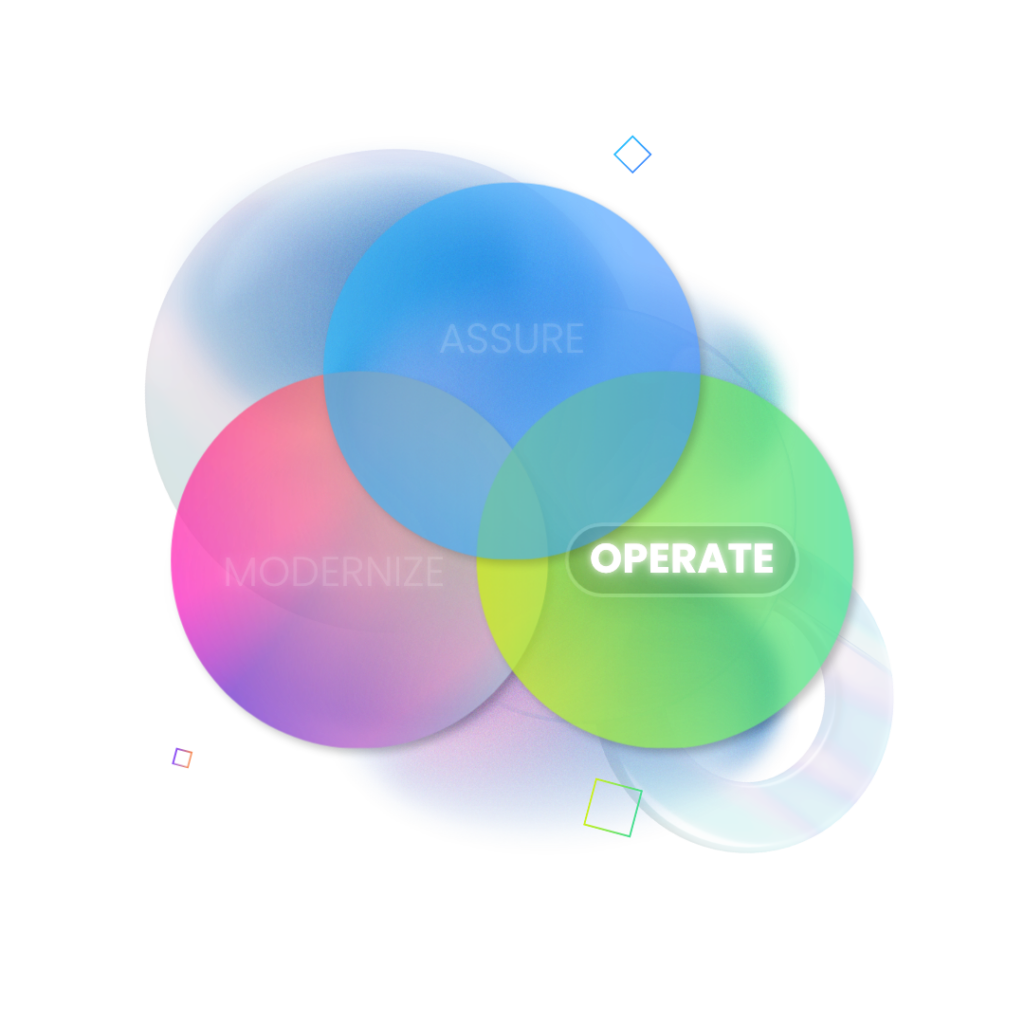
Operate delivers standalone value — AIOps, L1/L2 automation, FinOps, and BizOps all work independently. But the joint value of the three pillars is significantly greater: recurring incidents from Operate become regression tests in Assure (closing the production feedback loop), and operational cost data from Operate feeds the Modernize prioritization engine (telling you which systems to transform first based on what they are actually costing you in production). The commercial model supports starting with one pillar and expanding — most customers start with Operate or Assure and add the others in sequence.

Yes. Operate connects to SAP systems through the SAP connector. AIOps correlates SAP production events — IDoc failures, BAPI errors, transport import issues — to the affected business processes and surfaces them alongside non-SAP signals. Self-healing operations work in SAP environments where the failure pattern and remediation step are known and policy-approved. L1/L2 automation can handle SAP-specific runbook steps (transport import retry, IDoc reprocessing, job restart) within configured governance bounds.

• STAY AHEAD, STAY IN THE LOOP •

Turn Operational Knowledge Into Autonomous Action
Starting With One Incident Tower.

30-minute walkthrough — we will show you what noise reduction and L1/L2 automation look like on your highest-volume incident tower, with a cost-per-ticket trajectory.